European vs. American Cabinetry: Which Is Best for a Luxury Kitchen?
This Fitler Square kitchen remodel by J.THOM features a hybrid style of cabinetry and concealed appliances.
Short answer: neither label is “better” in a vacuum. European usually means frameless, systemized, ultra-clean lines; American often means face-frame, inset options, furniture detailing. The right choice follows your architecture, your appliances, and how you live - not your passport.
We design and install both lines every week. Mobalco (Spain) is the choice when the project wants seamless planes and tight reveals. J-THOM Signature (Pennsylvania) is our selection when the client brief calls for heirloom furniture character, custom sizing, or local serviceability.
Often, the best solution is a hybrid as depicted in the image above. The project, includes a mix of frameless and framed-inset cabinets with two-tone custom paint and a J.THOM Signature custom island.
What “European” Typically Means (and Why Clients Choose It)
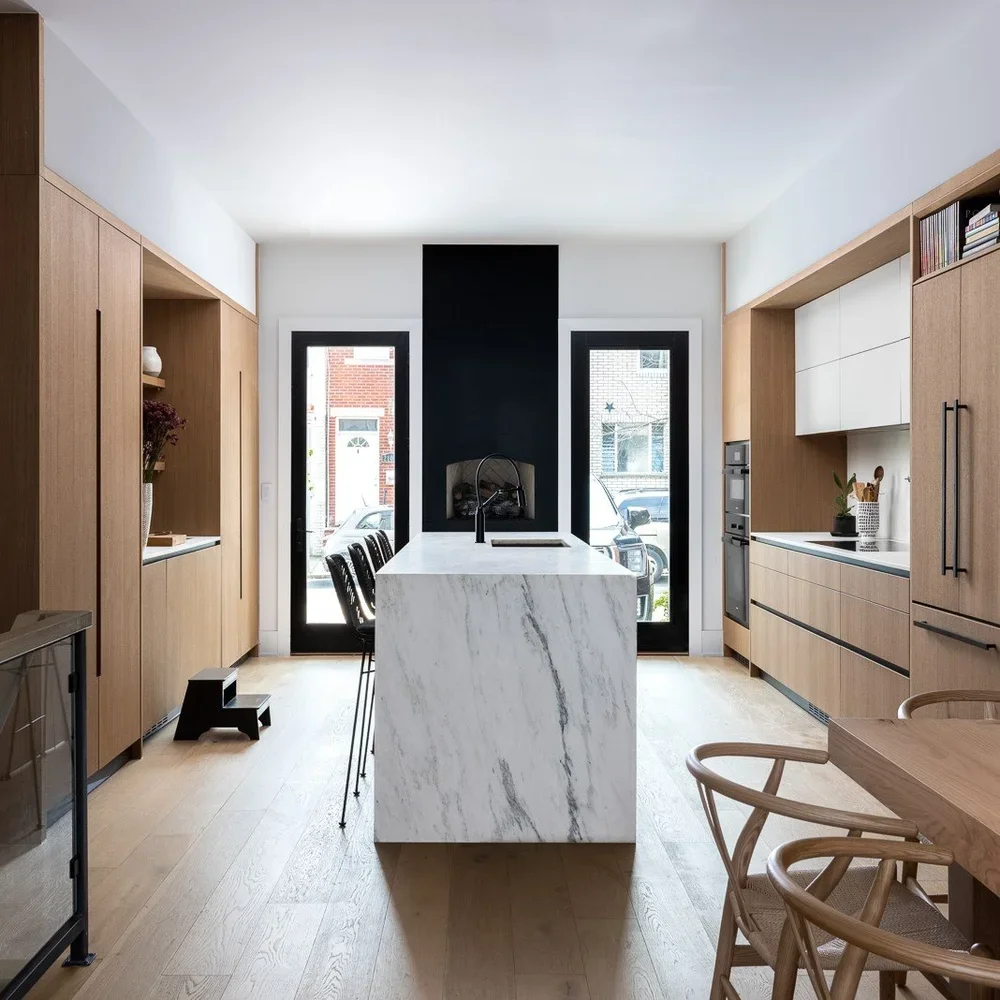
A warm, urban kitchen designed with Mobalco custom cabinetry.
Frameless boxes, modular logic.
Maximum interior volume, consistent gaps, doors/drawers sit flush to the case.Crisp, contemporary language.
Matte lacquer, structured laminates, technical veneers, integrated pulls.Precision integration.
Panel-ready appliances disappear; reveals are tiny and repeatable.Fast, repeatable assembly.
System channels, adjustable legs/plinths, tidy service cavities.Where it shines: handleless concepts, long runs with perfect alignment, apartments/condos where space efficiency and clean ceilings matter.
What “American” Typically Means (and Why Clients Choose It)
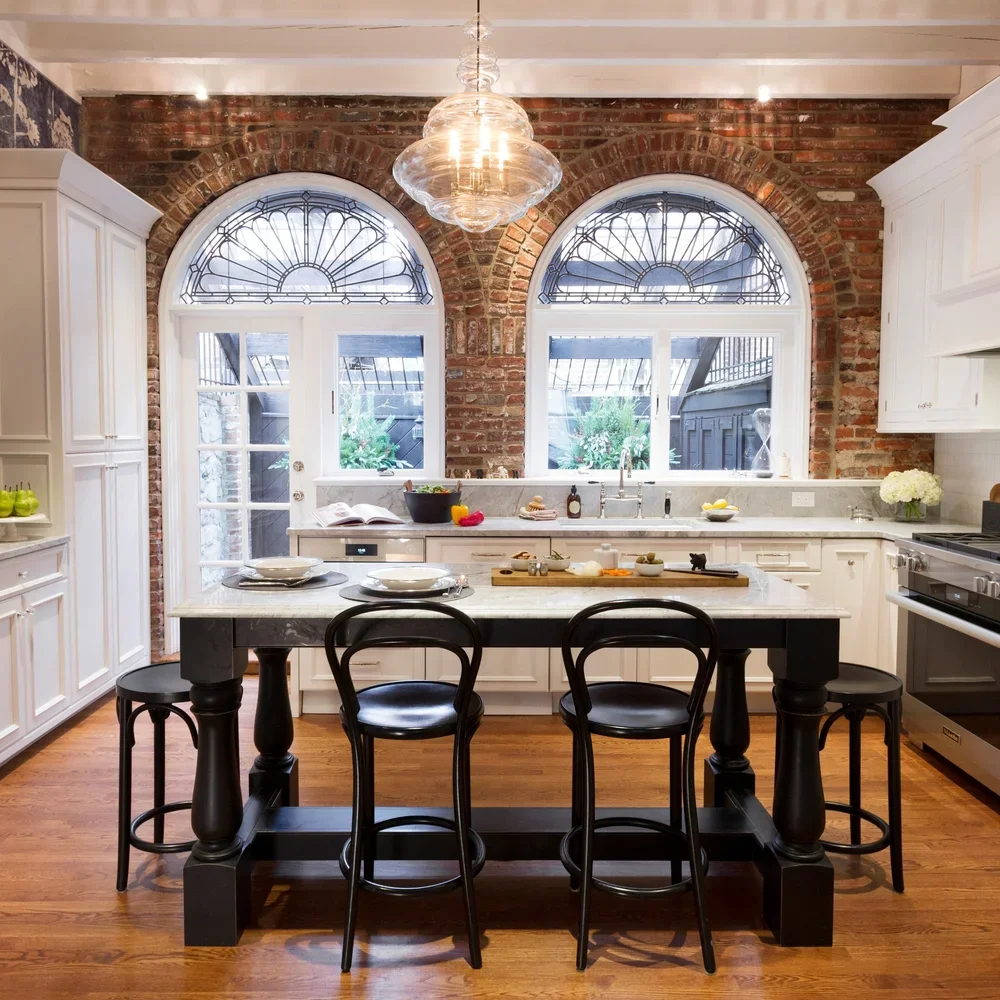
An elegant kitchen design and remodel in the heart of Rittenhouse Square featuring exposed beams, café style island seating, and arched brick-wall windows.
Face frames and inset options.
Classic joinery, visible rails/stiles, doors sitting inside the frame for a furniture feel.Material expression.
Solid wood frames, custom stains/paints, bespoke millwork profiles, furniture feet and furniture-style ends.Infinite sizing.
True one-off widths/heights without living inside a strict module grid.Serviceability & local craft.
Easy field adjustments, matching touch-ups, quick remakes when needed.Where it shines: traditional or transitional homes, statement islands as furniture, custom bars, rooms that want warmth and detail.
Cabinetry Performance Factors
Storage efficiency
European: Excellent interior volume
American: Slightly less due to frame; not a deal-breakerReveal discipline
European: Very tight, uniform
American: Flexible - can be tight or intentionally graphicAppliance integration
European: Disappears cleanly; panel lines align
American: Panels align; furniture look around appliances possibleDesign language
European: Minimal, planar, modern
American: Classic to transitional; furniture cuesField tolerance
European: Prefers straight walls and level floors
American: More forgiving; thicker frames hide varianceHardware
European: Metal system drawers, concealed hinges
American: Metal systems or dovetail wood drawers, inset hinge optionsFinish palette
European: Technical laminates, lacquer, veneers
American: Paint, stain, specialty glazesLead time & service
European: Predictable factory windows
American: Local coordination and easier remakes
Note: High-end hardware (Blum/Grass/Hettich) and soft-close action, and high CRI (color rendering index) lighting is available in both camps. The specs make the decision, not the nationality.
Design Alignment: How We Decide With Clients

Jason Thompson, founder and design director meeting with the design team in their Philadelphia showroom.
We start with three questions:
1) What do you want to feel?
Calm planes and zero ornament → lean European.
Tactile rails, shadow lines, and furniture cues → lean American.
2) What must disappear?
If you want panel-ready refrigeration and dish zones to vanish, frameless helps hide the mechanics.
If you want the island to read like a crafted table, face-frame/inset gives you that language.
3) Where will the eye rest?
If the room is about a stone slab, a view or another statement piece, reduce door chatter (frameless, long runs).
If it’s about joinery, make the rails/stiles the feature (inset, framed).
Materials & Finishes: Luxury Doesn’t Mean Fragile
Lacquer vs. paint:
European lacquers are incredibly flat and durable in matte; American catalyzed paints bring depth and allow easy touch-ups.Wood:
Rift white oak and walnut look exceptional in both systems; differences appear in reveal strategy and edge treatment.Edges & profiles:
Frameless keeps edges crisp and square; face-frame allows profiles, beads, and furniture-inspired details.
Installation & Longevity
Field conditions drive success. Frameless rewards level floors and straight walls; face-frame is kinder to old houses.
Service access matters. We plan driver locations, lighting channels, and appliance clearances at the design stage to avoid costly adjustments.
Finish aging: Matte woods age gracefully; high-gloss demands a no-scratch household regardless of system.
Sustainability & Compliance
Both European and American cabinet makers can meet strict emissions and chain-of-custody standards. We specify low-emitting substrates, request documentation, and pair them with CRI-90+ LED lighting for true color rendering. Sustainability is a specification - not a style.
Residential Design Brief Cues
Mobalco (European) when the brief says:
“Handleless, flush appliances, seamless runs, minimal joints, perfect lines under bright light.”
J-THOM Signature (American) when the brief says:
“Inset doors, furniture legs, custom width island, local finishing, fast service.”
Hybrid when the brief says:
“Modern shell, furniture island,” or “frameless perimeter with an inset butler’s pantry.”
Decision Guide: A Quick Matrix
Maximum storage + seamless planes → European/frameless
Furniture character + inset doors → American/face-frame
Disappearing appliances → European
Custom sizes without a grid → American
Old-house forgiveness → American
Minimal-maintenance satin/matte → Either
Fast local touch-ups → American
One-room gallery vibe → European or Hybrid
How We help you Choose
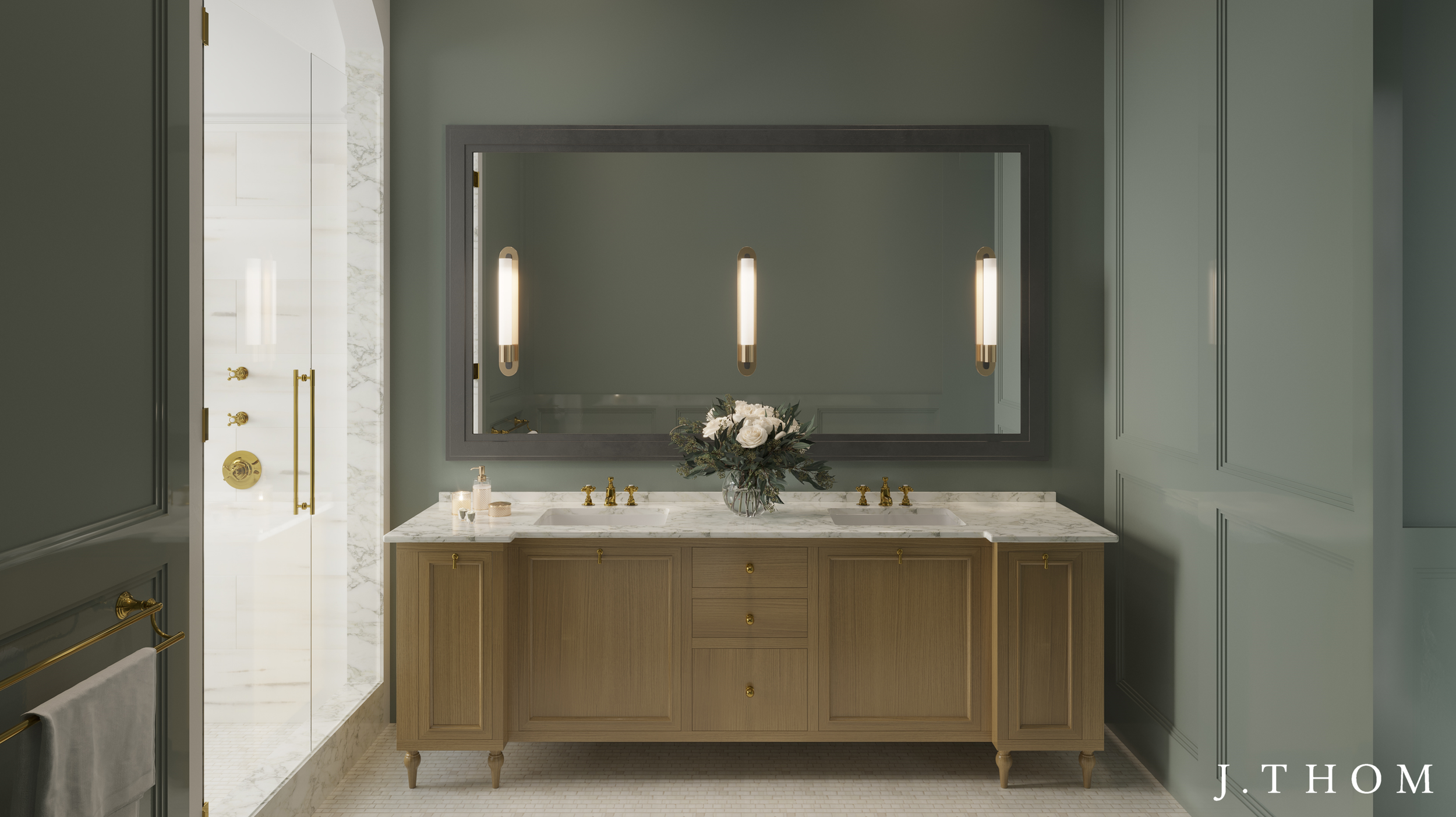
A J.THOM rendering for client approval
We let you “see” your home before we begin by creating a prototype of the reveal strategy, appliance panels, and lighting in the drawings before you sign off. Then we recommend Mobalco, J-THOM Signature, or a hybrid based on that plan - not on ideology.
FAqs
Is frameless “cheap”?
No. Frameless is a method. At the high end it’s about precision and materials, not cost cutting.
Are dovetail drawers better?
They’re beautiful, but high‑end metal drawer systems carry more and run smoother. We specify based on use, not nostalgia.
Can I mix styles?
Often the best result. Example: frameless perimeter for clean planes; an inset walnut island for warmth.
Bottom line: The “best” cabinetry for a luxury kitchen is the one that makes the architecture read (and makes your Tuesday) effortless.
To connect with a J.THOM designer about your project, schedule a design consultation.
View More Journal Entries