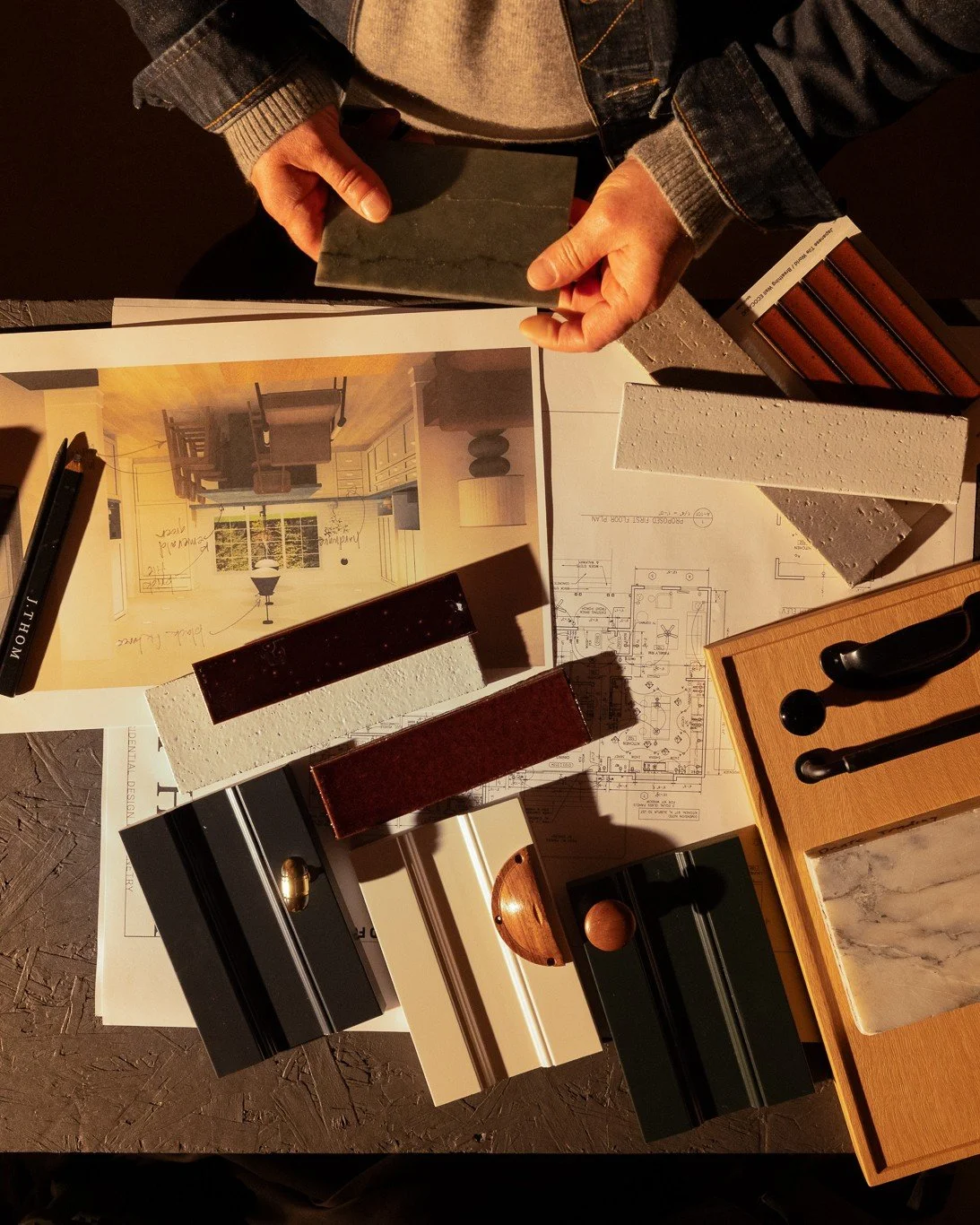
Historic Philadelphia rowhomes include early townhouses and period residences throughout the city that possess character that can’t be replicated. Tall ceilings, original millwork, masonry party walls, and carefully proportioned rooms give these homes a sense of permanence and craftsmanship that newer construction rarely achieves.
Yet many of these homes were built for a very different way of living. Kitchens were compact, storage was minimal, and circulation patterns reflected another era. Modernizing a Philadelphia rowhome requires more than updating finishes. It demands a thoughtful approach that respects the home’s architectural integrity while adapting it for how people live today.
At J.THOM Residential Design & Cabinetry, our residential design work in Philadelphia begins with understanding the rhythm of the home itself. Each renovation becomes a continuation of the home’s story, shaped by how our clients live within its existing constraints and possibilities.
Understanding the Architecture
Before any design decisions are made, we take time to understand the home’s original intent. Ceiling heights, wall thickness, window placement, circulation patterns, and structural constraints all inform what should remain intact.
Philadelphia rowhomes were designed with a clear architectural logic that no longer aligns perfectly with modern expectations. By respecting the framework, our renovations feel grounded rather than imposed. Instead of forcing contemporary layouts into historic envelopes, we allow the architecture to guide the design, ensuring that new spaces feel inevitable rather than disruptive.
J.THOM Signature Cabinetry
This sensitivity is especially important when designing kitchens and built-ins, where changes are both highly visible and heavily used. Whether a project involves custom kitchen cabinets in Philadelphia or a full home renovation, honoring the original proportions is what allows new work to blend seamlessly with the old.
Creating Storage and Space Without Changing the Footprint
One of the most common and frustrating challenges in historic homes is storage. Kitchens were never designed to accommodate today’s appliances, cookware, and daily-use items, and secondary spaces often lack functional built-ins altogether. Expanding square footage isn’t always possible, so thoughtful design becomes essential.
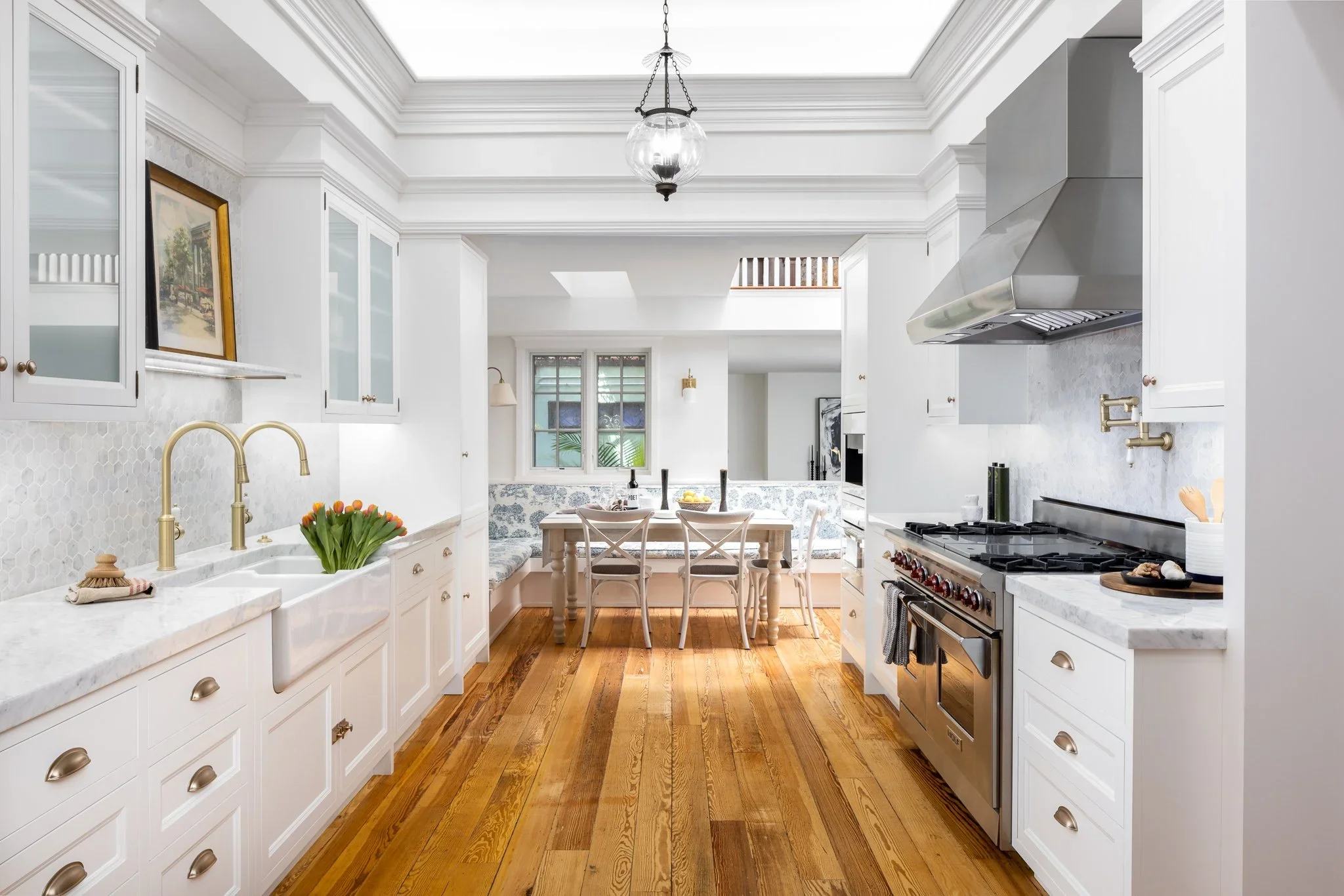
Custom cabinetry allows us to create storage where it doesn’t appear to exist. Chimney flanks become full-height pantry cabinets. Shallow alcoves are transformed into functional niches. Between-stud cavities accommodate recessed shelving or integrated lighting. Ceiling-height cabinetry takes advantage of taller historic proportions without overwhelming the space.
Arched Entry Console Storage Mobalco Custom Cabinetry
These strategies are particularly impactful in Philadelphia kitchen remodeling projects, where preserving the original footprint is often a priority. Rather than competing with the home’s history, custom cabinetry works in harmony with it—quietly improving functionality while maintaining architectural integrity.
Modern Kitchens That Respect Their Surroundings
Modern kitchen remodels in historic homes require balance. The goal isn’t to recreate the past, nor is it to introduce design elements that feel jarringly contemporary. Instead, we focus on restraint, proportion, and materiality.
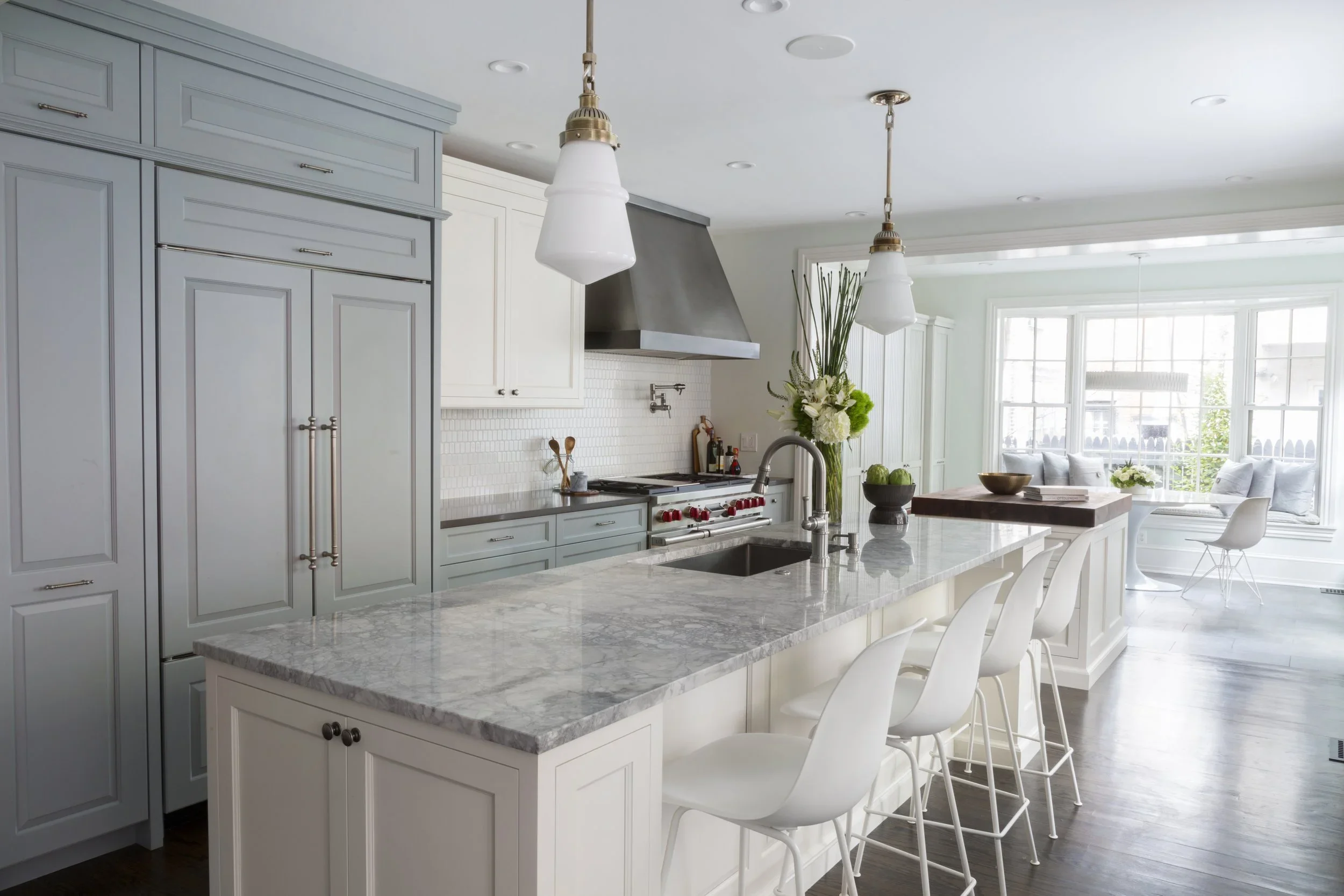
Custom cabinet doors are scaled to suit the architecture. Modern kitchen handles are selected for simplicity and longevity. Appliances are integrated to preserve clean sightlines, allowing the cabinetry and spatial rhythm to take precedence. Materials are chosen for how they age over time, ensuring that new additions will develop character alongside original elements.
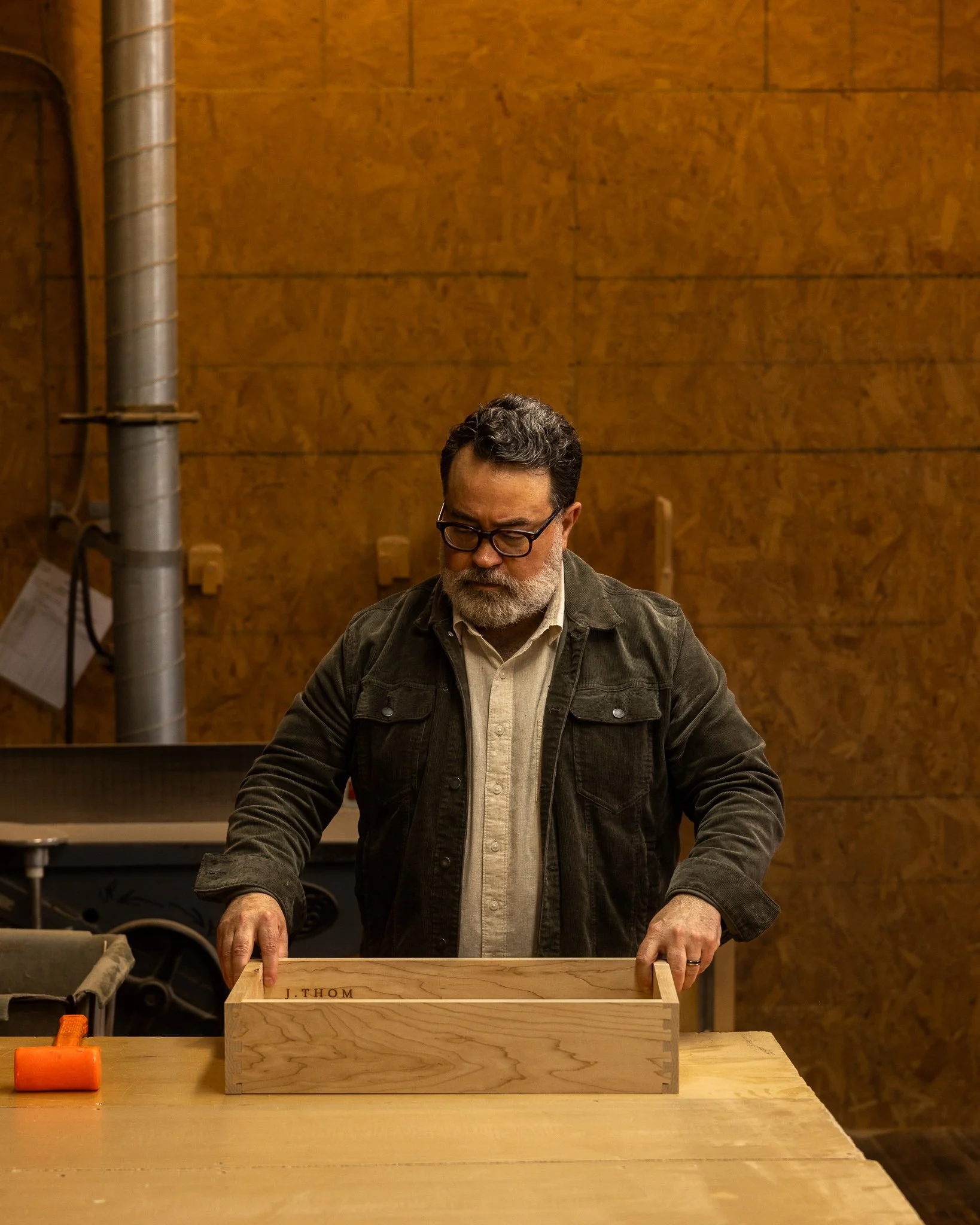
In some projects, we incorporate Mobalco, a sleek, contemporary European cabinetry system imported from Spain, when a more modern expression is appropriate. In others, J.THOM Signature cabinetry, (designed by founder Jason Thompson) and precision crafted locally, provides a transitional solution that bridges historic architecture with modern living.
J.THOM Signature Cabinetry
Selective Openness and Quiet Modernization
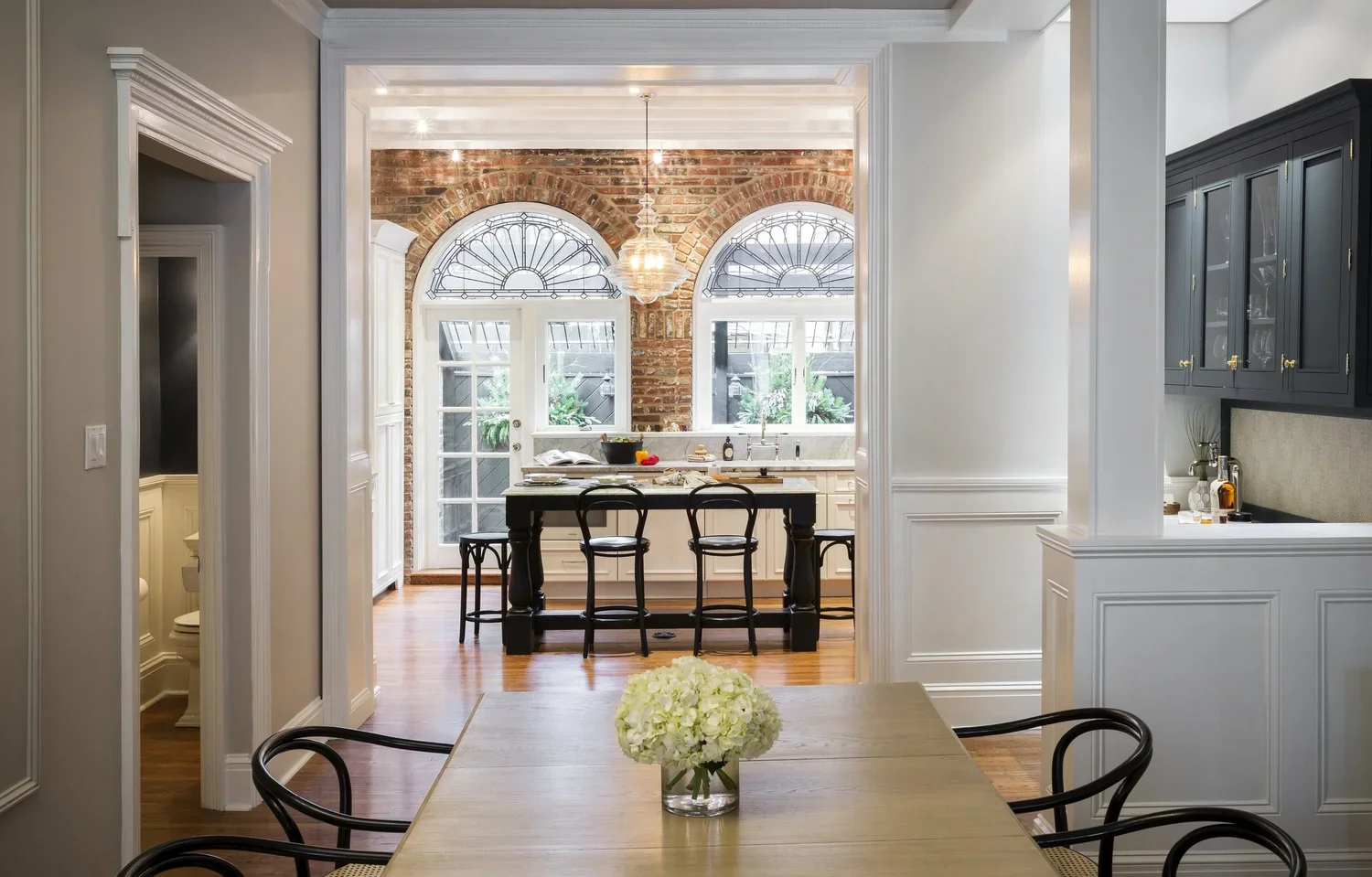
Improving flow in a historic home doesn’t require removing every wall. In many cases, selective openness produces a more authentic result. Widened cased openings, partial walls with integrated cabinetry, and carefully considered sightlines allow spaces to connect without sacrificing definition.
Beyond what’s visible, modernization happens behind the scenes. Updated HVAC, lighting, insulation, and electrical systems dramatically improve comfort and efficiency while remaining visually discreet. These upgrades support modern living without altering the home’s architectural narrative.
Bathrooms and secondary spaces benefit from the same philosophy. Custom vanities, recessed medicine cabinets, and millwork-integrated storage elevate these rooms without expanding their footprint, proving that even the smallest spaces can feel intentional and refined.
Hall Bath Renovation by J.THOM
Designing the Next Chapter of a Historic Home
Modernizing a historic home is an act of stewardship. When done well, the renovation doesn’t announce itself - it feels like a natural continuation of the home’s story. Visitors shouldn’t be able to easily distinguish what’s original from what’s new, and that seamlessness is what defines success.
At J.THOM, we specialize in custom cabinetry, kitchen remodeling, and residential design in Philadelphia, helping historic rowhomes evolve thoughtfully while preserving the soul that made them worth saving in the first place.
Considering a Historic Home Renovation in Philadelphia?
Explore how thoughtful residential design and custom cabinetry can transform a historic home without compromising its character.
Residential Design Services
Custom Cabinetry in Philadelphia
Philadelphia Kitchen Remodeling
Bathroom Design Services
View our portfolio to see how J.THOM approaches historic rowhome renovations with care, precision, and respect for architectural legacy. If you would like to speak with one of our talented designers, feel free to get in touch.