
What Most People Get Wrong About Cabinetry

Jason Thompson, Founder & Design Director of J.THOM
Most people think cabinetry is a style decision.
It is not.
At least not primarily.
Cabinetry is a system.
A manufacturing system.
An engineering process.
A service model.
An installation discipline.
The finished appearance is simply the visible result of everything happening behind the scenes.
And that misunderstanding is where many residential design projects begin to drift.
Especially in high-end kitchen renovations and custom cabinetry projects, people often focus on what is immediately visible: the door style, the finish, the hardware, the color palette.
But the real quality of cabinetry is usually determined long before those details are ever installed.
Cabinetry: One Word for Many Different Worlds
The word cabinetry gets used to describe entirely different levels of work.
Stock cabinetry.
Semi-custom systems.
Large-scale engineered millwork manufacturers.
Small-shop bespoke fabrication.
All of them technically fall under the same category.
None of them operates the same way.
Some systems are designed around speed and repeatability. Others are built around flexibility, engineering depth, and customization. Some are highly systemized. Others are almost entirely hand-built around a single project.
None of these approaches are inherently right or wrong.
The problem begins when people assume they are interchangeable.
They are not.
And in custom residential design, that distinction affects everything from timeline and coordination to installation quality and long-term performance.
Custom: The Most Misunderstood Word in Residential Design
Few words in the design industry are used more loosely than custom.
A one-person woodshop may describe their work as custom.
A sophisticated millwork manufacturer with engineering departments may use the same word.
A highly specialized architectural atelier may also use it.
Technically, they are all correct. Practically, they represent completely different capabilities, workflows, timelines, and levels of refinement.
The more useful questions are usually deeper:
How is the project engineered?
How are revisions documented?
How are finishes controlled?
How is installation managed?
What systems support the work from concept through completion?
Those answers reveal far more than the label itself ever will.
J.THOM Signature crafted locally to precise specifications.
Customization Changes the Entire Project
One of the biggest misconceptions in kitchen design and custom cabinetry is assuming customization only affects appearance.
It changes everything.
Engineering.
Approvals.
Scheduling.
Fabrication.
Installation.
Coordination.
That happens constantly in high-end residential work. In historic Philadelphia rowhomes or large-scale renovations, it’s prevalent as we weave spaces into the architectural history.
A wet bar becomes full-height cabinetry.
Integrated lighting is introduced.
Interior detailing becomes more refined.
Material selections evolve.
The project did not go off track.
It simply moved into a different level of execution.
That distinction matters because complexity changes investment, timeline, coordination, and fabrication requirements behind the scenes.
The strongest projects are usually the ones where clients understand early that expanding scope, adding detail, or increasing customization naturally changes the level of engineering, coordination, and fabrication behind the project.”
Design Details Most People Never Hear About
In custom cabinetry, some of the most important decisions are also the least visible.
Clients rarely walk into a kitchen talking about reveals, scribing, sequencing, or alignment.
But these are the details that quietly determine whether a space feels refined or unresolved.
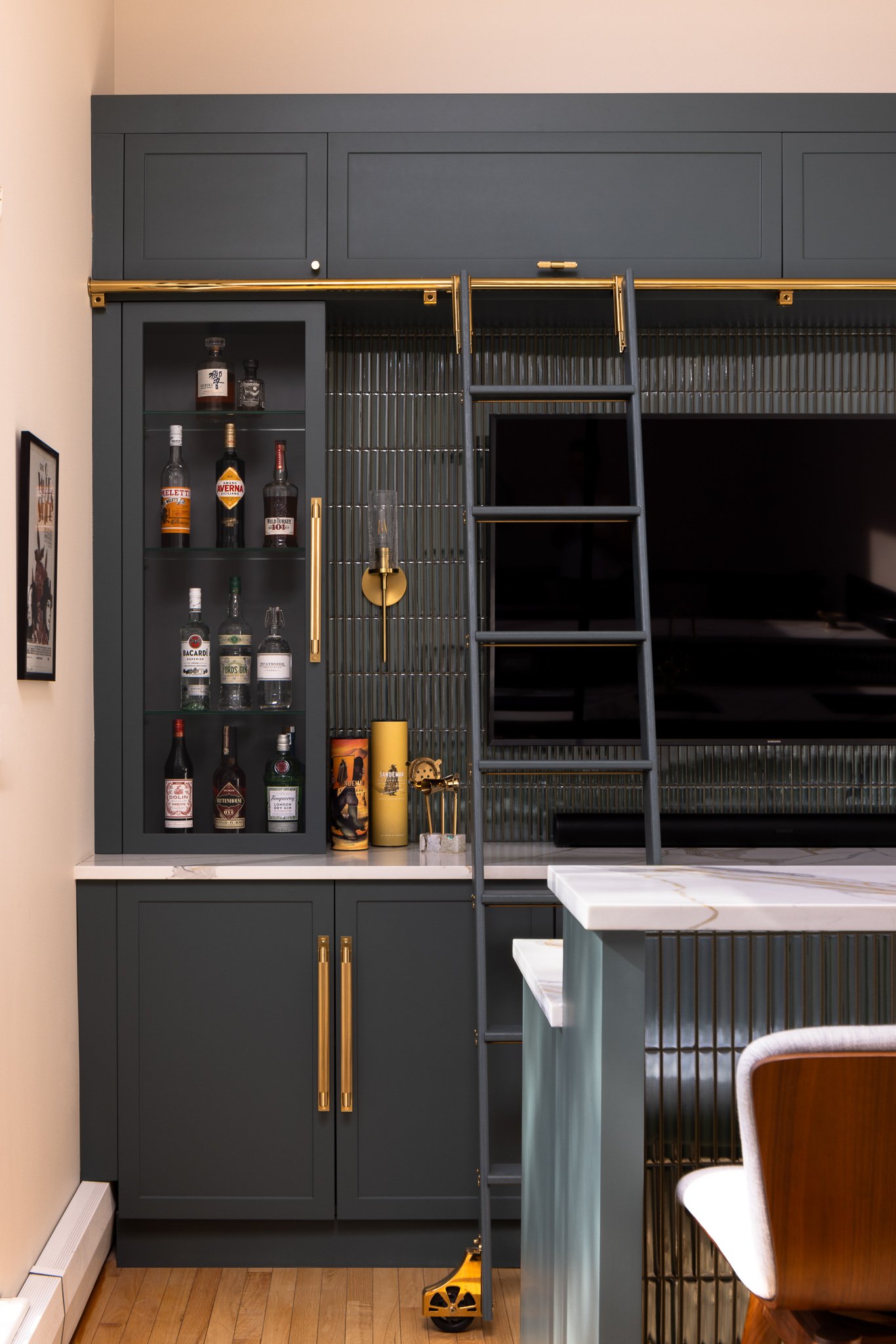
Rooftop Bar With Brass Finishes & Library Ladder - View Project
Poor Reveals
A reveal is the intentional spacing between cabinetry elements.
The space where cabinet doors meet.
The spacing between doors.
The shadow line beside an appliance panel.
Individually, these details seem small.
Together, they change everything.
When reveals are inconsistent:
doors can appear visually uneven
spacing begins to drift
cabinetry loses its sense of precision
Most people will not identify the issue technically.
They will simply feel that something looks off.
Good reveals create calm.
Poor reveals create visual tension.
Improper Scribing
Walls, ceilings, and floors are rarely perfectly straight.
During fabrication and installation, cabinetry is adjusted to compensate for those imperfections. That process is called scribing.
Done properly, cabinetry feels integrated into the architecture.
Done poorly, the room begins to show gaps, uneven filler pieces, awkward transitions, or inconsistent ceiling lines.
Proper scribing allows custom cabinetry to feel built into the home rather than simply installed inside it.
Alignment Inconsistencies
Alignment is one of the quietest forms of quality. It is also one of the first things people subconsciously notice. Alignment inconsistencies happen when:
drawer lines drift
hardware placement varies slightly
cabinet doors sit unevenly
shelving or panels fail to line up cleanly
None of these issues are dramatic individually. Collectively, they create visual noise. In refined interiors, alignment creates restraint and order. It allows even detailed spaces to feel calm, intentional, and architectural.
Sequencing Mistakes
Cabinetry installation is never independent. It overlaps with:
electrical
plumbing
flooring
lighting
countertops
trim work
appliance installation
The order in which these systems are coordinated matters enormously. When sequencing is poorly managed:
appliance gaps become awkward
countertops fit improperly
fillers become larger than intended
cabinetry finishes can be damaged during later trades
A strong cabinetry installation team is not simply installing cabinets. They are coordinating with the rhythm of the entire project.
Service Usually Mirrors the Cabinetry System
Another common misconception is assuming every cabinetry project receives the same level of oversight.
It does not.
Lower-cost cabinetry systems are typically paired with lower-touch service models because they are designed around efficiency.
Selections are streamlined.
Engineering is standardized.
Project oversight is simplified.
That structure works well for many homes.
More customized cabinetry projects naturally require more involvement:
technical review
finish coordination
design development
installation oversight
ongoing revisions
The level of service almost always reflects the complexity of the cabinetry system itself.
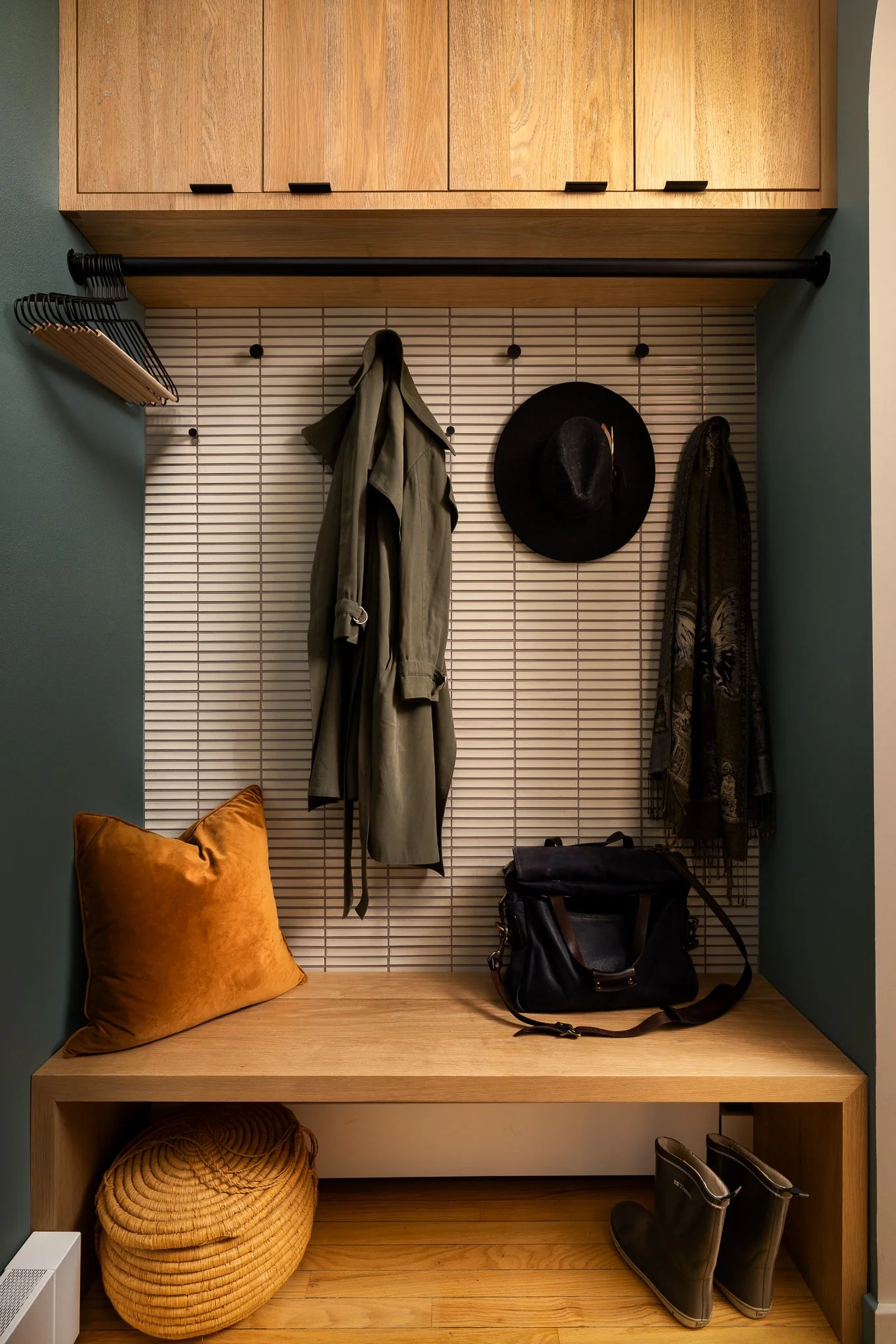
Cabinetry’s Most Overlooked Asset:
The Finish
People talk constantly about cabinet construction. They rarely talk enough about finishing.
But the finish is where quality often becomes visible over time.
Consistency.
Depth.
Texture.
Repairability.
Durability.
Sheen control.
A cabinetry finish is not simply a color selection.
It is a process.
Thoughtful design is rarely about spending the most money everywhere. It is about understanding where precision matters most.
Installation is the Final Proof
This may be the most overlooked part of the entire conversation. Cabinetry only performs as well as it is installed. You can have beautifully engineered custom cabinetry and still lose the room during installation.
Because ultimately:
reveals must align
scribing must disappear visually
sequencing must be coordinated
proportions must hold together in real space
The level of installation craftsmanship has to match the level of design intent. Otherwise, the work never fully performs the way it was meant to.
Installation is not the final step.
It is the final proof of the system.
The best cabinetry rarely calls attention to itself. It simply allows the architecture to feel calmer, more resolved, and more intentional. The proportions feel right. The storage feels natural. The materials age gracefully. And the room begins to function the way it always should have.
The Goal Is Alignment
The best cabinetry solution is not necessarily the most expensive. And it is not always the most customized. It is the one aligned with the project.
Aligned with the budget.
Aligned with the timeline.
Aligned with the architecture.
Aligned with the level of service required.
Aligned with how the home is meant to function and feel.
Because cabinetry is never just cabinetry.
It is an ecosystem of decisions, systems, people, engineering, and execution working together.
And when those pieces align properly, the result feels effortless.
Not because it was simple.
Because it was resolved.